
Pure Care / 03 / Pure Care
Kitchen Waste & Trash Bin Odor Neutralizing Spray
Focused odor care for bins and washable waste-area surfaces.
An odor-neutralizing pilot concept for contained household trash, bin interiors and washable non-food-contact waste-area surfaces where controlled placement matters.
Pilot packagingWashable hard surfaces
Plant-derived ingredient concept
IN THE FIELD / APPLICATION CONTEXT
Focused odor care for the waste zone.
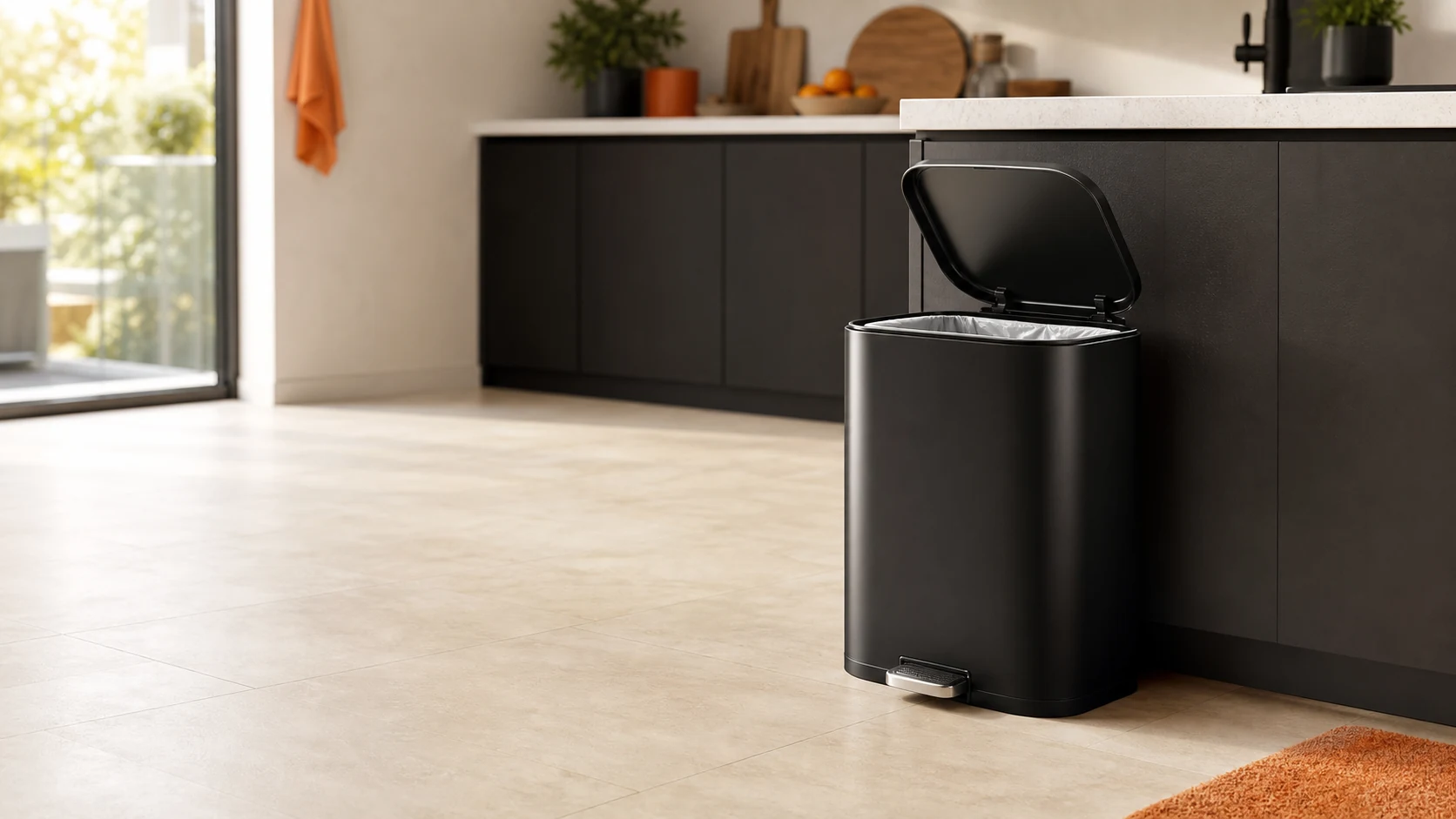
Created for measured interim misting within the contained waste zone and for washable trash-bin interiors after leaks, overflow and heavy soil are removed.
WASTE-ZONE ODOR CARE
Remove the waste. Wash the soil. Treat the zone that remains.
Kitchen Waste & Trash Bin Odor Neutralizing Spray is a pilot odor-care concept for contained household trash, bin interiors, lids and compatible washable non-food-contact surrounds. It supports a light interim refresh within the waste zone and a surface-treatment step during liner changes, while leaks, overflow and heavy soil still follow a remove-and-clean routine. The black Pure Care presentation signals a focused utility product, and the use directions keep it clearly separate from countertops, cookware and food intended for consumption.
The concept targets controlled odor care inside the waste zone; it is not presented as a disinfectant, sanitizer or substitute for emptying a full liner and washing spills.
- Product system
- Pure Care / 03
- Format
- 500 mL trigger spray
- Finish target
- Clean, low-residue target finish
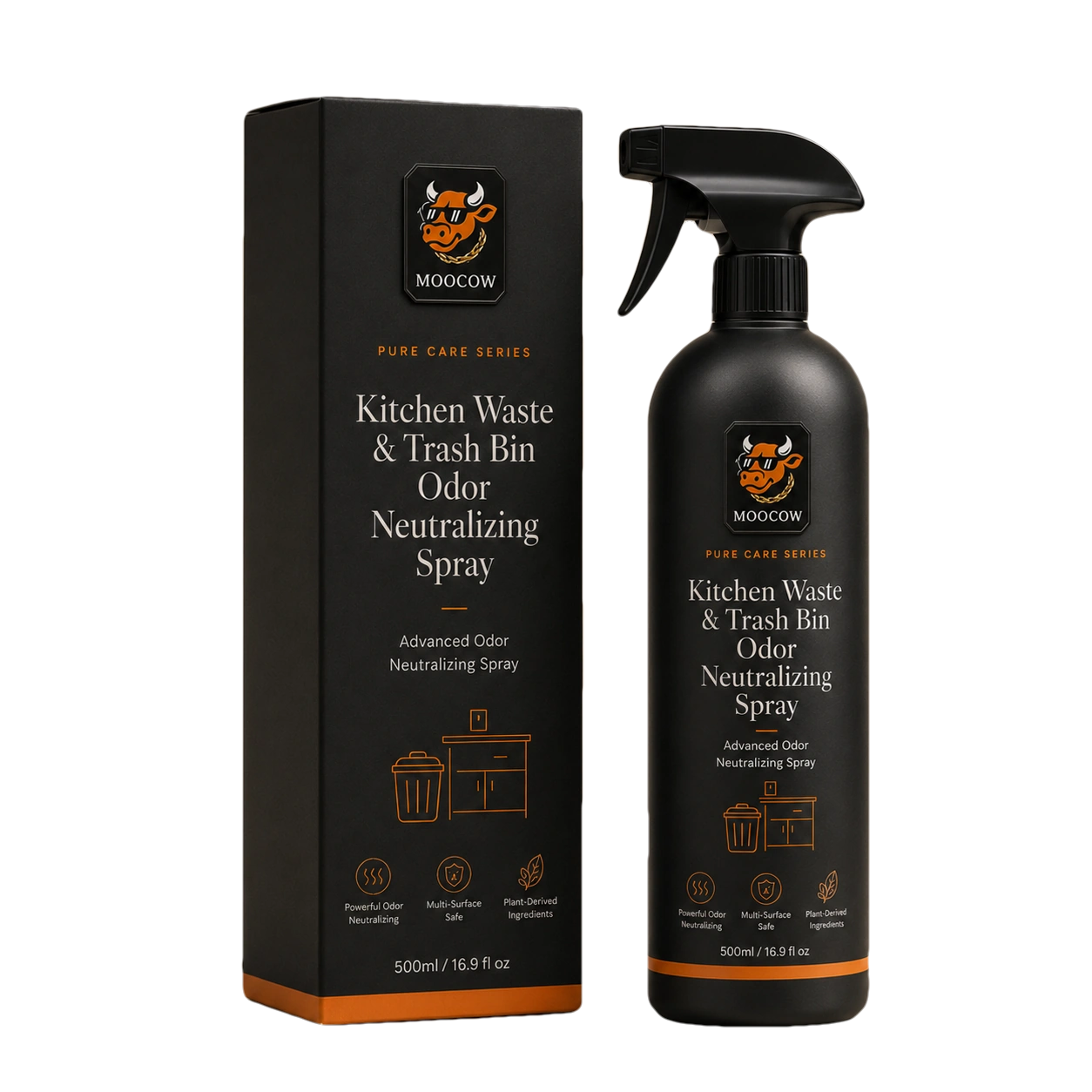
Kitchen Waste & Trash Bin Odor Neutralizing SprayFocused odor care for bins and washable waste-area surfaces.Pilot formula
WASTE OUT FIRST
Control the source. Then choose the right refresh.
A full liner, spilled liquid or trapped residue still has to be removed. Between liner changes, the pilot use concept allows a light, measured mist to be directed into the contained waste zone without soaking the contents. When the liner comes out, visible soil is washed away before the cleaned bin interior is treated. These are two controlled routines, not permission to cover a maintenance problem with excess product.
Remove active problems
Take out a full liner, leaks, overflow and trapped debris instead of spraying over them.
Refresh lightly
Use a measured mist within the contained waste zone between liner changes; never saturate the contents.
Reset the bin
At liner change, wash visible soil and treat the compatible cleaned surface with light coverage.

NON-FOOD-CONTACT BY DESIGN
Keep waste-zone chemistry inside the waste zone.
The intended targets are bin interiors, lids, pedal housings and approved surrounding hard surfaces. Food-preparation counters, cutting boards, cookware, utensils and storage containers are excluded from routine use. Light application and full air drying help manage buildup around seams and hinges, while a hidden-area test protects colored plastics, painted cabinetry and specialty finishes from unexpected change.
Focused placement
Direct the spray to approved waste-zone surfaces, not broadly across the kitchen.
Low-residue target
Measured coverage and full drying are designed to avoid sticky buildup.
Surface gate
Plastic, paint, flooring and sealed stone are checked before full use.

ODOR CONTROL AS A PROCESS
Contain, contact and reset.
The product architecture is developed around controlled placement within the waste zone rather than airborne perfume. Finished-product odor panels and exposure testing will determine the final interim-misting and cleaned-surface directions used at launch.
01
01 / Contain
Household trash stays inside a sound liner; leaks, overflow and heavy residue are removed instead of misted over.
An odor treatment is not a replacement for emptying a full bin or detergent-cleaning a spill.02
02 / Contact
A controlled spray places the odor-neutralizing system into the contained waste zone or onto the approved cleaned non-food-contact surface.
Coverage, exposure, odor response, residue and material compatibility are measured during pilot testing.03
03 / Reset
An interim mist is allowed to settle without soaking the waste; a treated empty bin or surrounding surface is allowed to air dry completely before a fresh liner is installed.
Exposure, preservation, trigger performance and storage stability must be locked before commercial production.
FOCUSED ON THE BIN AND ITS SURROUND
A practical follow-up step after routine cleaning.
Use only on materials included in the final validated surface list and keep treatment away from food-contact zones.
Contained household trash
Use only a light interim mist within the waste zone, subject to final label approval, without soaking the liner contents.
Lids and pedal housings
Address approved washable exterior touch zones after visible soil has been cleaned.
Recycling station surrounds
Support odor care on compatible sealed non-food-contact surfaces around sorted containers.
Commercial waste stations
Provide a repeatable remove-clean-treat-dry step for hospitality or facility routines after validation.
CLEANING AND DEODORIZING ARE DIFFERENT JOBS
This product follows the wash; it does not replace it.
The commercial story stays useful by describing the exact role of the spray and excluding regulatory claims the pilot concept has not earned.
What this system is
- An odor-neutralizing pilot concept for approved waste zones
- Designed for controlled interim misting and washable non-food-contact bin surfaces
- Used only after leaks, overflow and heavy soil have been removed
What this system is not
- A disinfectant, sanitizer or registered antimicrobial treatment
- A cleaner for countertops, cutting boards, cookware or food containers
- A substitute for emptying liners, washing spills or fixing bin leaks
CONTROLLED APPLICATION / STEP BY STEP
A better result begins with the right sequence.
Follow the full method, including preparation, controlled placement and the final finish check.
- 01
Assess the waste zone
Remove a full liner, leaks, overflow and debris trapped under rims, pedals or removable parts.
- 02
Choose the routine
For an interim refresh, use a light mist over contained waste only if allowed by the final label. During liner changes, continue with the surface-cleaning routine.
- 03
Wash visible soil
Use an appropriate compatible cleaner for spills and residue, then remove the cleaning solution before surface treatment.
- 04
Test the finish
Check a hidden area of colored plastic, paint, sealed stone or flooring for visual change.
- 05
Apply light coverage
Mist the approved non-food-contact surface without flooding seams, electronics or porous joints.
- 06
Air dry completely
Keep the bin open until the surface is dry, then install a fresh liner.
If odor remains, inspect for hidden residue under rims, inserts and pedal mechanisms before repeating treatment.
Use boundaryDo not apply to food intended for consumption, cookware or food-contact surfaces. Do not saturate waste. Keep away from children and pets during application and until treated surfaces are dry.
PRODUCT LEDGER / QUICK REFERENCE
Know the system before it reaches the surface.
- Format
- 500 mL trigger spray
- Development stage
- Pilot formula and packaging
- Use zone
- Washable non-food-contact waste surfaces
- Application
- Light mist after source removal and cleaning
- Finish target
- Low visible residue after full drying
- Validation focus
- Odor panels, residue, surface compatibility, preservation and packaging
SURFACE DECISION / BEFORE YOU APPLY
Use the right system on the right surface.
Finish chemistry, coatings and previous treatments vary. The table below defines the current development boundary.
Ideal starting points
- Trash-bin interiors and lids
- Washable bin surrounds
- Compatible non-food-contact hard surfaces
Test first
- Painted cabinetry
- Colored plastics
- Sealed stone or flooring
Keep outside the use zone
- Food and cookware
- Counters used for preparation
- Porous or unsealed surfaces
PERFORMANCE BRIEF / RESULT PROFILE
A focused routine for the surfaces where waste lives.
Waste-zone odor care
A pilot concept for trash-bin interiors, lids and compatible washable non-food-contact kitchen surrounds.
- Targets waste-area odor
- Washable hard-surface use
- Low-residue target
FORMULATION DISCIPLINE
Selected materials. Controlled claims.
MOOCOW develops around quality-focused raw-material sourcing and supplier technical data, then validates the finished formula, packaging compatibility and real application before locking commercial claims.
Supplier references may includeBYK / Clariant / Nouryon / Eastman / Evonik / SAN NOPCO / Troy / Wanhua ChemicalNames identify possible raw-material sources only and do not imply endorsement of the finished product.
PRODUCT QUESTIONS / CLEAR ANSWERS
Clear answers before the first order.
Can it replace washing the trash bin?
No. Remove waste and clean heavy soil first; the spray is the follow-up odor-care step.
Can it be used on a food-preparation counter?
No. Keep it to compatible non-food-contact waste-zone surfaces.
Is it a disinfectant?
No disinfecting or sanitizing claim is being made for this concept.
How should seams and lids be treated?
Use light coverage and allow complete air drying without saturating seams.
What is validated before release?
Odor performance, residue, drying, preservation, packaging compatibility and compliant use directions.
MOOCOW / DISTRIBUTION READY CONVERSATION
A focused odor-care SKU for home, hospitality and facility channels.
The product gives distributors and private-label partners a clear routine that can be demonstrated without overclaiming: empty, wash, treat and dry. Final sales support will connect approved surfaces and directions to odor-performance panels, residue checks, preservation, packaging stability and compliant non-antimicrobial positioning.
Packaging, directions and performance language remain subject to pilot production and application validation.